Party alleges unlawful voter tracking and breaches of ballot secrecy; Yashar accuses it of refusing to accept voters' decision.
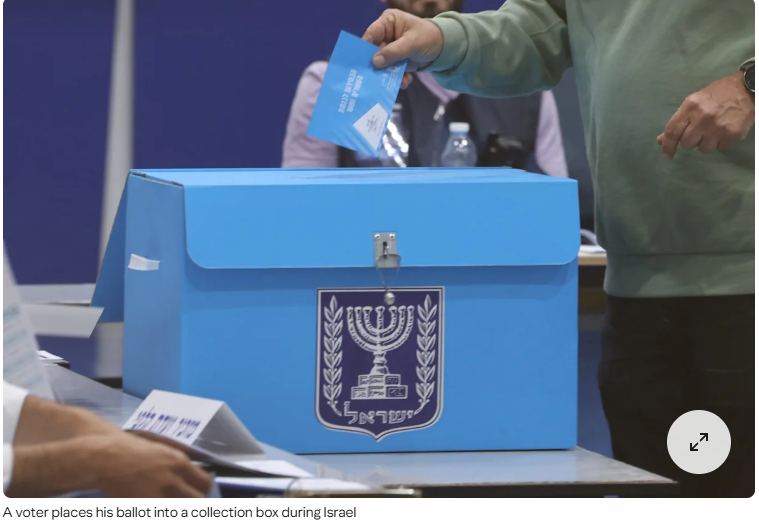
Likud appealed the results of the election for the 26th Knesset on Wednesday, asking the Jerusalem District Court to cancel voting results at 120 polling stations and order a new vote at those locations.
The largest party in the Knesset argues that systematic violations in predominantly Arab communities undermined equality between the parties and the secrecy of the ballot. Alternatively, it seeks reruns at 95 polling stations across 41 communities.
The filing follows a court decision on Tuesday extending Likud's deadline to appeal until Wednesday.
Likud alleges Arab parties gained unfair advantage
Likud alleged that real-time information was gathered inside polling stations to encourage turnout among voters who had not yet cast their ballots, violating Supreme Court rulings. It argues that Ra'am and the Joint List gained an unfair advantage while Likud complied with the restrictions.
The appeal comes after the Central Elections Committee repeatedly rejected claims of systematic harm to election integrity. On Tuesday, Channel 12 reported that the committee had examined roughly 800 complaints submitted by Likud and found that only about five contained substantive claims warranting further examination.
The report described duplicate complaints and multiple recordings of individual incidents presented as evidence of a wider phenomenon.
Yashar, led by Gadi Eisenkot, criticized the appeal on Wednesday.
"Anyone who wants genuine unity does not wage a relentless campaign to delegitimize the results of democratic elections and insist on denying the will of the people," the party said.
The legal dispute over voter tracking predates the election. Likud initially challenged a prohibition imposed by Central Elections Committee chairman Justice Noam Sohlberg on polling-station representatives passing information to their parties about who had voted.
After the full committee permitted the practice, the Supreme Court overturned that permission on September 17, finding that the representatives' public role did not authorize the activity and that it infringed voters' privacy.
Likud later defended permission for those representatives to transmit anonymous turnout totals. On October 22, following a petition by Israel Democracy Guard, the court barred digital counting and real-time transmission of those figures as well. A clarification three days later made clear that the prohibition applied regardless of how the information was transmitted.
Encouraging people to vote is lawful; the restriction concerns representatives using information obtained inside polling stations to serve a party's campaign.
Likud's appeal says affidavits describe violations at 95 polling stations, including in Nazareth, Tamra, Sakhnin, Umm el-Fahm, Rahat and Ein Mahil. It cites applications, mobile phones and handwritten records used to track participation.
Ra'am and the Joint List won a combined 19 seats: eight and 11, respectively. Citing an expert opinion by Prof. Avraham Diskin, Likud argues that the rise in turnout and voting patterns in Arab communities raises serious suspicions of prohibited activity that yielded at least three seats.
Separately, Likud argues that subtracting 6,679 votes from Ra'am could transfer one seat to Shas, raising the number of parties supporting a Netanyahu-led government from 53 to 54. That would still leave them seven seats short of a majority, although Likud argues it could alter coalition-building options.
Earlier investigations into suspected election interference found insufficient evidence to overturn results
The legal question is whether an irregularity could have affected the election results, including the distribution of seats - not whether it would necessarily change who forms the government.
The appeal also argues that ballot secrecy was violated at 53 polling stations in 23 communities. It cites allegations of unauthorized people entering voting booths, ballot slips being photographed, and slips being handed to voters outside polling stations. Likud argues that such conduct could also pressure other voters, making a rerun necessary rather than simply subtracting individual votes.
The earlier investigations into suspected election offenses have not established that the results should be overturned. On November 17, committee chairman Justice Noam Sohlberg said, in a statement issued with Shin Bet director David Zini's agreement, that there was no evidence at that stage of bribery on a scale that could affect the results. The investigation remained open, with its focus shifting toward security issues involving subversion and foreign influence.
In the separate police investigation involving Ra'am activists arrested around election day, senior law-enforcement officials had considered the evidence weak, and on November 16, the suspects were released, and the case was expected to close.
The appeal was filed through attorney Ilan Bombach with the Jerusalem District Court sitting as a court for administrative affairs, under Section 86 of the Knesset Elections Law.
The law generally requires an appeal within 14 days of publication of the results, although the court can extend the deadline in special circumstances. A three-judge panel hears the case.
The court can annul voting nationwide or at particular polling stations and order a rerun, correct the allocation of votes, or determine that one candidate was elected instead of another. A further appeal on a legal question generally requires permission from the Supreme Court president.
An election appeal does not suspend the Knesset's work or invalidate decisions it has already taken.