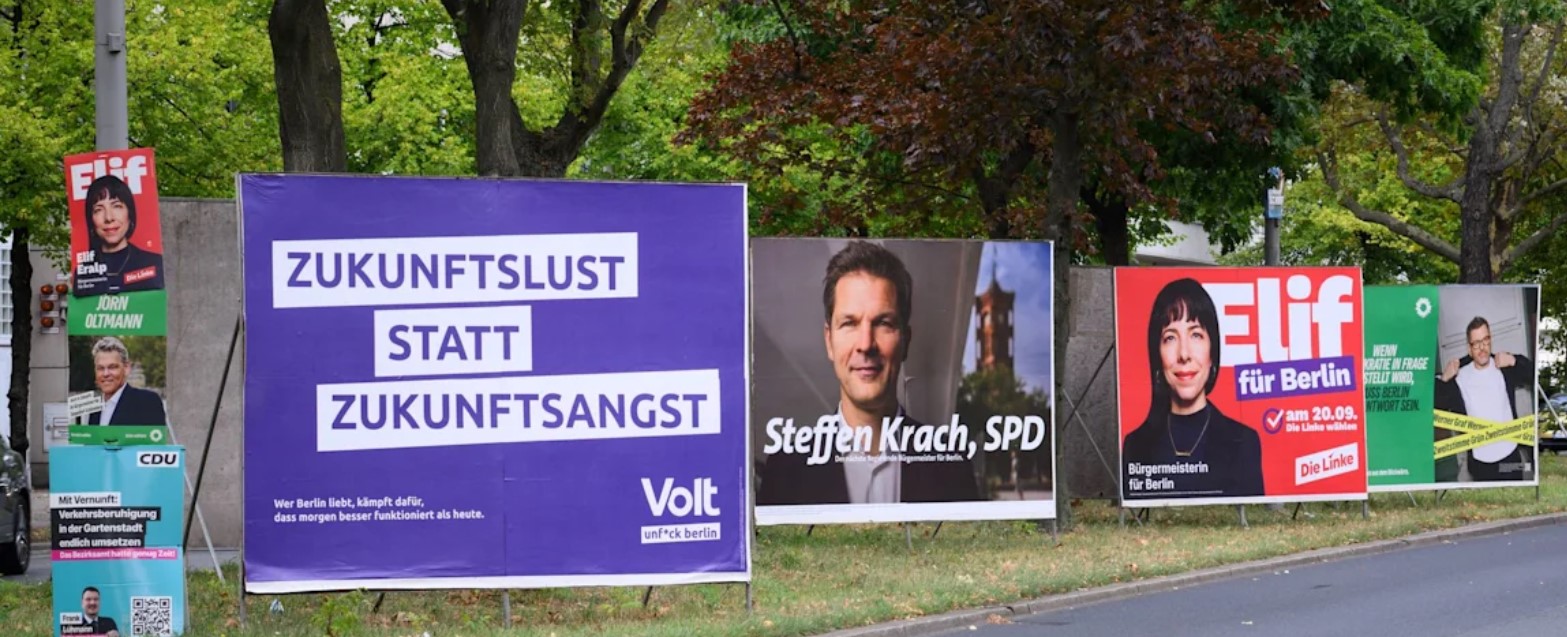
Lead candidates in Germany's much-anticipated state elections took to the streets on Friday in a final attempt to sway voters ahead of Sunday's polls, which could prove decisive for the future of Chancellor Friedrich Merz, while the far right seeks to capitalize on a recent landslide in Saxony-Anhalt.
Merz's centre-right Christian Democrats (CDU) could see their worst ever post-war result in any state or national election in the sparsely populated north-eastern region of Mecklenburg-Vorpommern, where the latest polls put them just above the 5% hurdle needed to enter the state parliament.
In Berlin, the CDU might lose the mayor's office in what looks to be a neck-and-neck race with a far-left party, while the anti-immigrant Alternative for Germany (AfD) is projected to come in a close third.
Merz has cleared his schedule for next week, cancelling a planned trip to the UN General Assembly in New York, in anticipation of a potentially painful post-election reckoning.
The AfD, meanwhile, hopes to further build momentum after taking a record share of the vote in the eastern state of Saxony-Anhalt, where it fell just short of an absolute majority.
However, the far-right party, which is considered a suspected extremist organization by domestic intelligence, faces a far bigger challenge in Berlin, as well as in Mecklenburg-Vorpommern, where the Social Democrats (SPD) of incumbent state leader Manuela Schwesig overtook the AfD by one percentage point in the most recent poll on Thursday.
Speaking to public broadcaster ZDF on Friday morning, Schwesig said it was "quite an achievement that we have managed to keep the AfD well below 40%," considering that the party had achieved nearly 44% of the vote in Saxony-Anhalt.