Elections Alberta rules forbid mayors and councillors from raising money for referendum ads
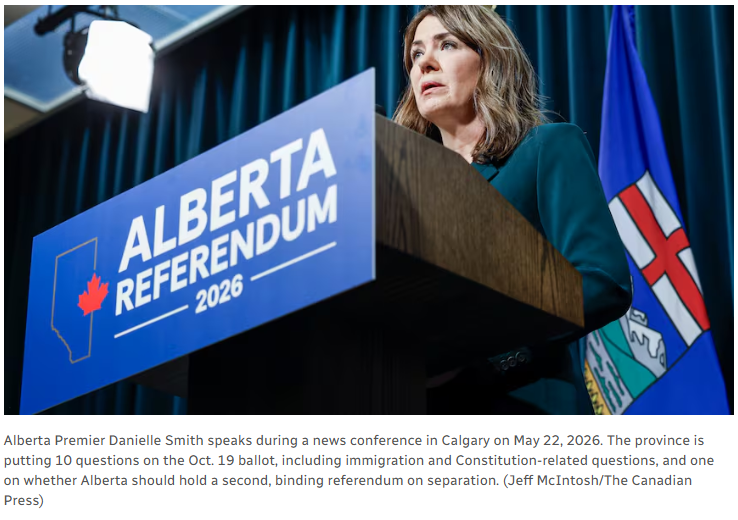
As Alberta’s fall referendum approaches, the province’s cities and towns have been told they can’t campaign on the issues.
Elected officials have been expressing opinions on Alberta independence and in turn, urging residents to vote one way or another in the referendum in October.
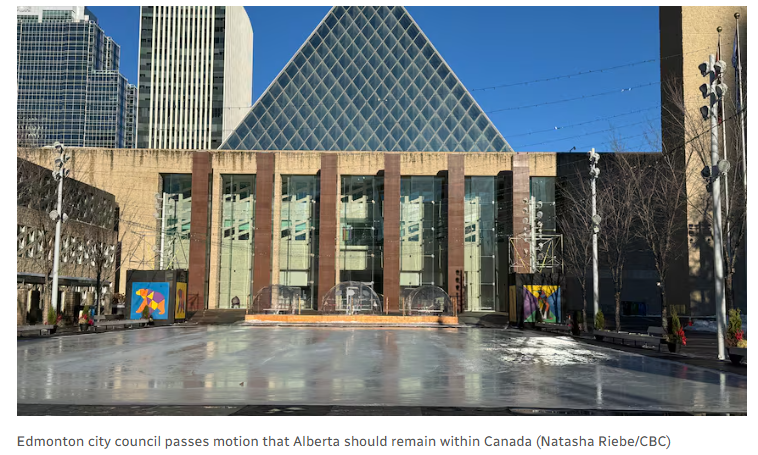
Last week, Edmonton city council backed Mayor Andrew Knack’s motion “that the City of Edmonton declare that Edmonton and Alberta are a vital part of Canada, and that Alberta should remain a province within a united Canada.”
Knack told CBC News on Wednesday that council is responsible for representing the city and that he thinks the referendum question is a distraction.
“If Edmonton were to separate from Canada, there would be significant economic harm,” Knack said.
“I have to spend time now reassuring potential employers, talking to investors who are asking the question of me, ‘should I invest in here with all of this that's going on right now?’ “
While mayors and councillors are allowed to take a position, Elections Alberta legislation dictates that municipalities aren’t permitted to raise money or advertise to support a side.
Under the Elections Finances and Contributions Act, municipalities are considered prohibited corporations and not allowed to be a third-party advertiser, which means they can't take in or spend over $1,000.
Brendan Boyd, a MacEwan University political science professor, said that politicians can give their opinions but have to be careful about what may be considered advertising or campaigning.
"Of course they can say things and pass motions, as the City of Edmonton did,” Boyd said in an interview Wednesday.
Advertising and campaigning, he said, could include things like attending and speaking at events.
”They have to be pretty careful with how much they do and what exactly they do if they want to be supportive of one position or another."
Calgary Mayor Jeremy Farkas has taken a strong stance against separation.
“We have to stand up, we have to fight and we need to push back,’ Farkas told CBC News last week.
“So I'm going to be doing more than just moral support. I think that given the economic carnage that separation would incur on the city of Calgary specifically, we have a duty and responsibility to act.”
Farkas is calling on the provincial government and the premier to change the legislation to allow municipalities to formally campaign.
But Calgary Coun. Landon Johnson said in an interview earlier this month he thinks cities and towns can help ensure everything goes smoothly for the referendum, but he doesn't think they should be picking sides.
"There's elected officials and then there's bureaucrats. And so for me, the bureaucrat side is supposed to be as neutral as possible on as many things as possible," he said.
Last week, Elections Alberta posted a bulletin aiming to clarify the rules for municipalities under the Elections Finances and Contributions Act.
“In response to much confusion and misinformation about what qualifies as referendum advertising under the EFCDA, as well as many questions and complaints to my office, this Interpretation Bulletin helps political participants and electors understand and comply with the legislation,” wrote Gordon McClure, chief electoral officer
“This also demonstrates my office’s commitment to the fair and impartial administration of electoral legislation and holding all political participants equally accountable.”
Confusing the issue slightly, according to Boyd, is that the same rules apply to the 10-question referendum as they do with general elections, when municipalities aren’t allowed to campaign in support of specific parties.
“It's because it's a referendum and there's a specific question, there needs to be clarity around what is just talking generally good or bad about Canada or Alberta and what is actually advertising,” Boyd said.