Sept 17 (Reuters) - A federal judge blocked Montana from enforcing a new law aimed at curbing election-related "deepfakes" against a conservative PAC that distributed mailers with AI-generated images of two candidates holding pride flags.
US District Judge Susan Watters in Billings on Wednesday sided with former Republican state lawmaker Dan Bartel and his group, Accountability in State Government, in finding that the law likely posed a threat to their free speech rights under the US Constitution's First Amendment.
Watters, an appointee of Democratic President Barack Obama, said the law unconstitutionally targeted specific viewpoints, permitting AI-generated ads intended to bolster a candidate's reputation while barring deepfakes designed to injure the reputation of a candidate or party.
"Accordingly, because the Act treats identically deceptive media differently based solely on whether its message is weaponized to damage or deployed to elevate a candidate, the Court finds that Plaintiffs are likely to succeed in establishing the Act constitutes viewpoint-based discrimination," Watters wrote.
She issued a preliminary injunction, opens new tab that would prevent prosecutors, as well as the state agency that monitors and enforces campaign finance and disclosure laws, the Montana Commissioner of Political Practices, from investigating or prosecuting Bartel's group for violating the law.
Watters declined to block all enforcement of the law, however, citing the US Supreme Court's decision last year curtailing universal injunctions, saying a ruling in favor of the named plaintiffs alone would provide them with absolute relief.
"We were pleased to see the district court recognize the timeless principle that free speech is essential to free and fair elections," Adam Schulman, a lawyer for the plaintiffs at the conservative legal group the Hamilton Lincoln Law Institute, said in a statement.
A spokesperson for Montana's attorney general, whose office defended the law and was also a defendant in the case, did not respond to a request for comment.
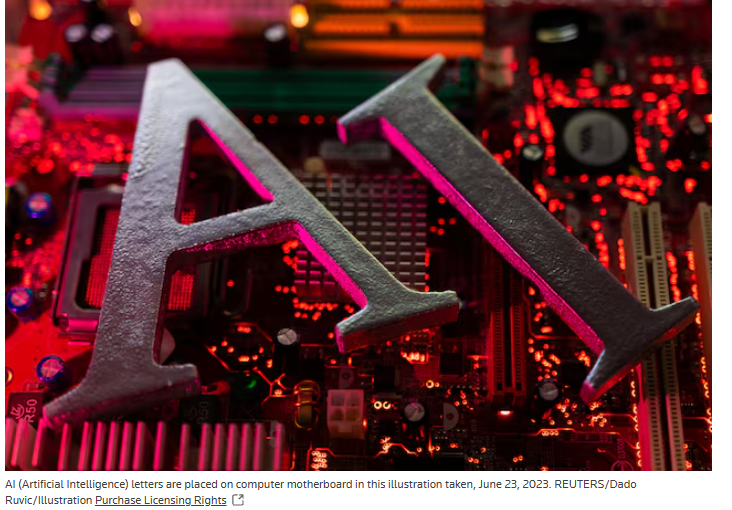
The lawsuit took aim at Senate Bill 25, which the Montana legislature passed last year with the goal of addressing what lawmakers perceived as a "threat to free and fair elections" posed by the rapid rise of generative AI.
More than 30 other states have adopted similar laws to regulate deepfakes in political messaging, according to research by the legal advocacy group Public Citizen. Some states' laws have similarly faced legal challenges, such as Hawaii's and California's, which federal judges have blocked on First Amendment grounds.
Montana's law specifically sought to restrict content that falsely depicts a candidate in order to spread misinformation about them, such as AI-generated videos that portray someone as saying something they did not.
The law included a safe-harbor exemption allowing election-related communications that include disclaimers prominently stating that the material was edited by AI, and a carve-out for deepfakes that constitute satire.
The lawsuit was filed in May after the Montana Commissioner of Political Practices received administrative complaints from candidates who were targeted by mailers distributed by Bartel's group.
The mailers used authentic photographs of the candidates, but also contained realistic, AI-generated imagery, such as two that depicted the candidates wearing preferred-pronoun pins and holding pride flags.
After Bartel's group sued, the commissioner informed the court that the agency was dismissing the complaints on the grounds that they fell within the satire exception.
But Bartel's group contended an injunction was still needed given the potential for future complaints based on other political ads it planned ahead of the November 3 election.
The case is Accountability in State Government v. Knudsen, US District Court for the District of Montana, No. 6:26-cv-00038.
For the plaintiffs: Adam Schulman of the Hamilton Lincoln Law Institute
For Montana: Michael Russell and Thane Johnson of the Montana Department of Justice