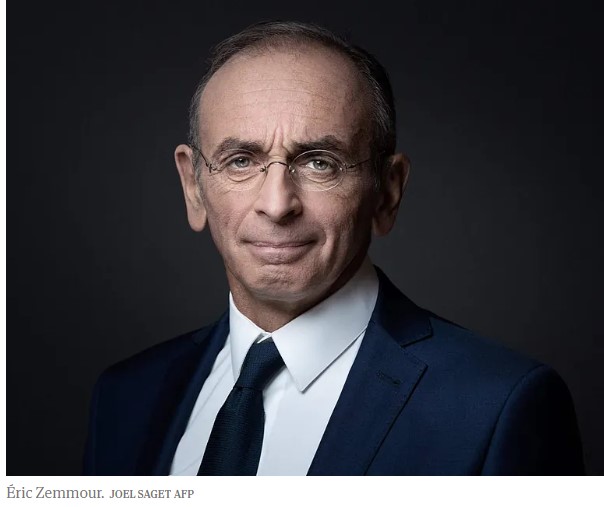
A name has appeared in Colombia’s political arena ahead of the 2026 presidential elections — Abelardo de la Espriella, a Caribbean lawyer who, for two decades, built a media profile as the defender of politicians, business leaders, and celebrities, and who has now taken a decisive leap into electoral politics.
Well-known in the courts and in legal headlines, but until recently not associated with a presidential bid, Abelardo de la Espriella — with his provocative style, hardline proposals, and a confrontational discourse — has become one of the most visible and popular right-wing presidential contenders.
De la Espriella: A media-savvy lawyer turned presidential aspirant in Colombia
De la Espriella, born in Monteria in July 1978, studied law at Sergio Arboleda University, one of the country’s most prestigious institutions. He made a name for himself as a litigator in high-profile cases. He represented Uribista figures, defended military officers accused of human rights violations, and also artists in contractual disputes.
At the same time, he cultivated a public image through opinion columns, television programs, and a permanent presence on social media — something many compare to what happened in Argentina with Javier Milei, who had constant media exposure years before winning the 2023 elections.
That blend of media lawyer and political commentator helped pave the way for his formal entry into politics. At the end of 2024, he announced the creation of his own nationalist and conservative movement, which he describes as “the voice of citizens tired of insecurity, corruption, and the complacency of the elites.”
With this clear message, he demonstrates his aggressive style, seeking a tougher stance against crime — reminiscent of former right-wing president Alvaro Uribe (2002–2010), whose government was repeatedly accused of extrajudicial killings, spying on opponents and journalists, collaboration between the armed forces and paramilitary groups, and all kinds of human rights abuses.
Against this backdrop, De la Espriella toured mid-sized cities and towns affected by violence, with a hardline message against illegal armed groups and common crime. This has positioned him in recent polls as one of the most competitive non-traditional right-wing candidates, vying for space against Uribista figures and traditional conservative sectors.
‘With a firm hand, but a smaller heart’: De la Espriella’s latest slogan, a play on Uribe’s Democratic Center motto
Seeking to position himself as further to the right of former president Uribe’s Democratic Center — often classified by analysts as a far-right party — De la Espriella adopted the slogan “with a firm hand, but a smaller heart,” reinventing Uribismo’s motto: “firm hand, big heart.”
In this sense, De la Espriella’s appeal among certain segments of the population is closely tied to the radical nature of his proposals, aimed at responding to the country’s climate of insecurity and polarization. Among his most notable positions:
-Economy and employment: although less detailed here, he has defended a model of “business freedom” with lower taxes for large corporations and more flexible labor regulations. He claims private investment is “the only engine capable of defeating structural poverty.”
-Hardline against crime: he proposes reinstating life imprisonment and, in extreme cases, the death penalty [which would require constitutional reform] for heinous crimes such as mass killings, child rape, and terrorism. He also promises to expand prison capacity and militarize major cities in coordination with local governments.
-Judicial reform: he argues that the justice system has been “captured by excessive guarantees” and calls for the creation of fast-track special courts for crimes committed in flagrante delicto. In his narrative, it is about “ending the impunity that fuels crime.”
-Defense of traditional values: he positions himself as a defender of the “family model” and has spoken out against expanding rights for sexual alternatives, drawing criticism from LGBTQ+ groups. At the same time, he promises to promote religious education in public schools and limit abortion to exceptional cases.
-Firm foreign policy: he proposes cutting ties with regimes he considers “dictatorships,” such as Venezuela, Nicaragua, and Cuba, while strengthening alignment with the United States and Israel.
A context ripe for reactionary proposals
De la Espriella’s rise cannot be understood without Colombia’s current context. The country is experiencing a wave of insecurity affecting both major cities and rural areas: increases in theft, extortion, criminal gangs, and the reconfiguration of armed groups — particularly after the limited success of President Petro’s “Total Peace” policy.
Polls show insecurity is now the top concern for citizens, even above unemployment — which is at its lowest in a decade — or the cost of living, with inflation still above the Central Bank’s 3% target despite a decline.
This sense of vulnerability is compounded by political polarization. Gustavo Petro’s election in 2022 represented a historic shift to the left but also sparked deep rejection among conservative sectors, which had long dominated power and remain anchored in the most reactionary right.
The opposition to Petro, though seeking unity to regain power in 2026, remains divided between Uribismo — which collapsed spectacularly three years ago after Ivan Duque’s presidency — and new figures looking to capitalize on discontent.
A confrontational style winning followers in Colombia
Beyond his proposals, De la Espriella has gained notoriety for his combative style. On social media, he does not hesitate to use incendiary language against rivals, critical journalists, and government figures.
His speeches in public squares rely on short, forceful, and often controversial phrases that later spread widely as viral videos — in a simple style aimed not at analysis but at directly blaming “the other” as the cause of society’s problems, a practice that has gained global traction in the past decade.
This style has allowed him to connect with young people who consume politics through digital platforms, but it has also brought accusations of authoritarian populism.
Analysts warn that his narrative resembles that of radical right-wing leaders in other countries, who capitalize on discontent with traditional politics and offer simplistic solutions to complex problems.
All this has earned the lawyer the backing of General Eduardo Zapateiro, a controversial former commander of Colombia’s armed forces during Ivan Duque’s presidency, who later reinvented himself as a political critic of President Petro.
Although Zapateiro recently expressed his support for Santiago Botero, another candidate representing this right-wing populist sector, this week he publicly endorsed De la Espriella.
“Colombians, given the current situation in the country and the recent events that have left in mourning those of us who lovingly served the homeland — witnessing the continuous murders of our heroes, soldiers who gave their lives, and the atrocious assassination of a presidential candidate — I have made the patriotic decision … to join and support Abelardo de la Espriella in his presidential candidacy.”
De la Espriella, between the traditional Latin American caudillo and the anti-establishment politician
Bukele in El Salvador, Javier Milei in Argentina, and even Donald Trump in the United States pave the way for a very specific — and increasingly shared — approach to understanding and practicing politics.