By Pablo Navarrete
In 2011, students staged huge protests in Santiago. Two years later, their organisers sit in government
On Sunday 17 November, Chileans went to the polls and elected to Congress four high-profile student leaders, who first rose to prominence during the mass student protests of 2011. Camila Vallejo, aged 25 (the Guardian’s 2011 “Person of the Year”); Giorgio Jackson, 26; Karol Cariola,26; and Gabriel Boric, 27, all secured seats in the lower House of Deputies, with terms to commence next year.
In the presidential election, centre-left coalition candidate for Nueva Mayoria (New Majority) and former president Michelle Bachelet fell just short of the 50% needed to win in the first round.
She now faces a runoff election against right-wing candidate Evelyn Matthei on 15 December, and is expected to win. However, since the election, both student activists and their critics have asked why leaders from a combative and anti-state movement have chosen to participate in electoral politics and join Bachelet’s government.
The privatised education system that brought student protestors to the street in 2011 is just one part of the neoliberal economic model that has been in place in Chile since 11 September 1973, when a US-sponsored military coup headed by General Augusto Pinochet overthrew the democratically-elected socialist government of Salvador Allende. Using state terrorism, Pinochet forced a radical programme of neoliberal policies, including mass privatisation, on the population. During its 17-year rule, the regime murdered thousands to bring ‘free markets’ to Chile. A 1988 referendum on Pinochet and the regime, recently depicted in the film “No”, ushered in democracy, with a nominally centre-left coalition taking power after the 1989 elections.
However, Chile’s new elites largely perpetuated the dictatorship’s economic model, a key feature of which has been inequality: in Chile, the richest 0.01% of the population, or about 1500 people, hold 10% of the country’s wealth. Inequality is also a feature of the educational system: just 40% of students attend free state-funded schools, which are of poor quality and starved of funds. The rest attend charter or private schools, often paying high tuition fees.
Higher education is similarly stratified and unequal. The University of Chile, the country’s “main and oldest” university, receives just 14% of its budget from the state. The shortfall in state funding is offset by students and their families, with university fees among the highest in the world in relative terms. 84% of the cost of higher education is shouldered by students and their families, while a meagre 16% is funded by the state.
In 2006 hundreds of thousands of secondary school students took to the streets in what became known as the ‘Penguins’ Revolution,’ a reference to their black and white school uniforms. Students demanded a range of reforms to the education system, from the waiving of university admission test fees to the abolition of the LOCE, an education law created in the last day of the Pinochet dictatorship. However, the students’ expectations of profound reform were betrayed by a government and parliament dominated by centre-right political elites who had a vested interest in maintaining a profit-driven education system.
Broadly, this is the system that the current student uprising has been challenging. Beginning in May 2011, student protests demanding free, quality state-funded education rocked Chile. Some 700 schools were occupied and daily protests took place during that year. One protest in August 2011 brought over half a million people to the streets of Santiago. With the population of Chile just 17 million, it was equivalent of nearly 1.9 million people packing the streets of London. The student protests continued throughout 2012 and, to a lesser extent, 2013.
When we asked Camila Vallejo, then president of the University of Chile Student Federation (FECh) and main spokesperson of the Confederation of Chilean Students (Confech), what the significance of the protests was, she argued that they had “served to awaken consciousness, and signalled a new horizon for Chilean society, in the direction of making profound changes to our country.”
For Giorgio Jackson, then president of the Catholic University of Chile Student Federation (FEUC) and also a Confech spokeperson, the protests have contributed to making Chileans “put aside the taboo and fears that existed in thinking of a different model” and have “delivered a clear and honest message to the public”. “The people empathised with this message because it was not an invented one,” he continued. “The reproduction of inequality and privilege exists in Chile and there is a generation that says ‘no more’. The neoliberal model, the model of education as a consumer good, has had 30 years to operate without restrictions. And it hasn’t showed the benefits it promised. So now it’s time that we Chileans change this model.”
As student leaders, both Vallejo and Jackson, along with the student movement as a whole, have been very clear that it is not just the education system that has to change. The economic and political model to which it belongs has to be transformed too. Key to this change is replacing the 1980 constitution enacted under Pinochet. These unified demands have come from leaders of differing political traditions. Vallejo and Cariola are members of Chile’s communist party, while Jackson had no ties to traditional political parties and has represented a more liberal left perspective. Importantly, both of these political traditions have found a home in a broad-based movement characterised by its creativity and its ability reach out and work with other sectors of society such as trade unions and environmental groups. For example, a week after a mass student protest in August 2011, the Chilean student movement joined a national strike declared by Chile’s trade union confederation CUT that mobilised half a million people on the streets of Santiago.
By the end of 2011 Chile’s political class was on the defensive. As Karol Cariola, a former president of the University of Concepción Student Federation, said, “the model is trembling and so are those who support the model.” Throughout 2012 Chilean students continued to mobilise massive numbers to protests, although they faced heavy repression from Chile’s security services.
As 2012 drew to a close there was a feeling that while the students had captured the nation’s attention and energised demands for democratic renewal in Chile, ultimately the political class had not conceded significant ground to the students. Given this, in 2013 Vallejo, Jackson and Cariola and three other former student leaders decided to run for Congress in the hope of achieving change from within the system. They did so with the support of the coalition behind Bachelet’s candidacy. Bachelet in turn seems to be making concessions to the students: free education at the primary, secondary and university level is one of her key campaign pledges.
However, Vallejo and the other student leaders’ decision to run for office has proved controversial within some sectors of the student movement, not least because it was under Bachelet’s first presidency from 2006 to 2010 that secondary school students’ demands regarding education were largely ignored. More generally, the critique reflects distrust in the institutional political process, not only among some student sectors but also in the population as a whole. Eloisa Gonzalez, spokesperson of the secondary school student body ACES, has consistently argued against participating in elections and was part of a group of students that occupied Bachelet’s campaign headquarters. Similarly, Melissa Sepulveda, the new president of the Universidad de Chile’s student federation, has said: “I wouldn’t vote for Giorgio Jackson… for Camila Vallejo neither. The possibility for change isn’t in Congress.”
But Vallejo remains adamant that her position has not changed. In response to critics who have accused her of betraying the student movement, she said shortly after winning her seat in Congress that she still believes in the same things she did when she was president of the University of Chile’s student federation. No doubt the other former student leaders bound for Congress would say the same. With a Bachelet presidential victory on the horizon, the challenge all the former student leaders face is to spearhead a transformation of Chile’s education and political system from within. Meanwhile, much of the student movement will remain in the streets demanding the same.
Pablo Navarrete is the producer of the documentary ‘Chile Student Uprising,’ to be released early next year.

728 x 90
From classroom to Congress: student leaders in Chile are taking power
- Sección: ISEN
- 11:12 AM, dic 13

Últimas Publicaciones
-
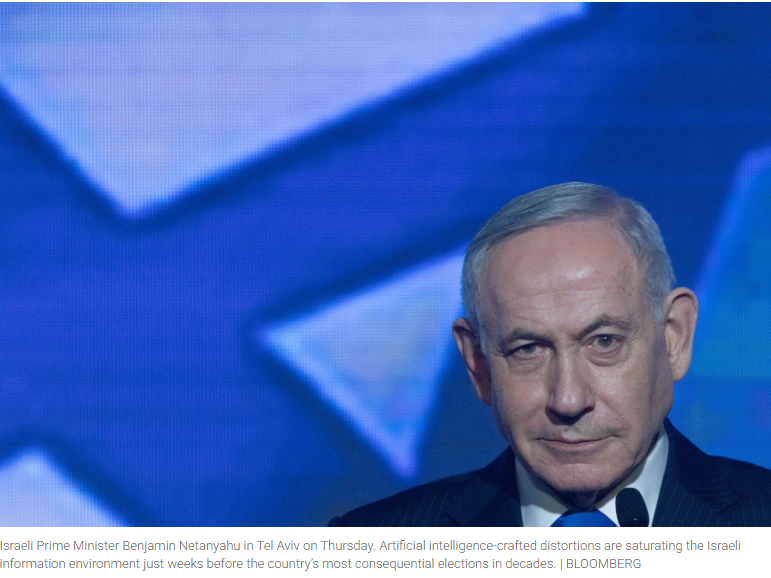
Fake and divisive ads proliferate in Israel’s first AI election
- ISEN
- No.36337
- Alberto Bethancourt
-
German poll finds 45% want snap elections if Merz resigns
- ISEN
- No.36336
- Alberto Bethancourt
-
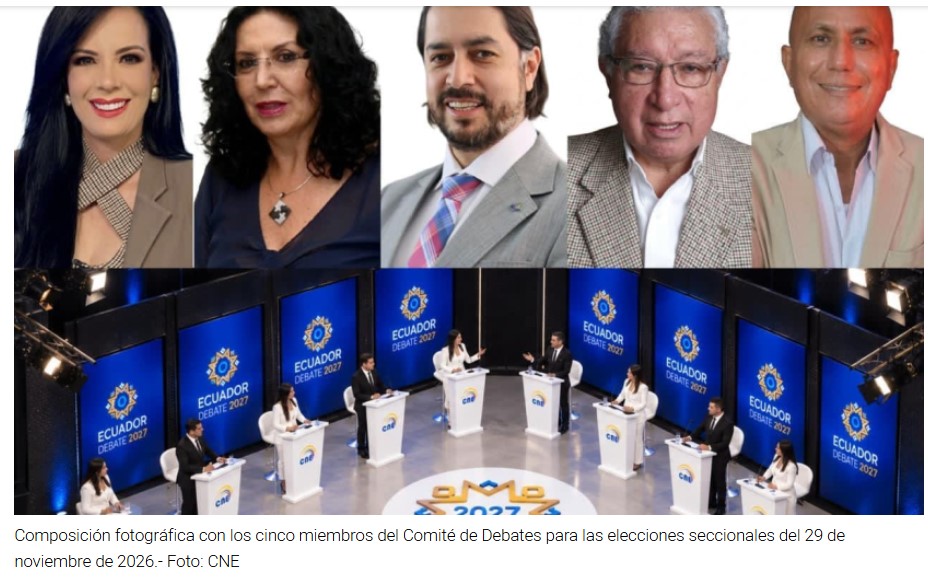
CNE presenta al Comité que definirá los temas de los debates para las elecciones...
- SINE
- No.52366
- Nair De La Rivera


