(AFP)
Kabul — Former finance minister Ashraf Ghani on Monday launched his bid to become the next president of Afghanistan, kickstarting the 2014 election race as the first big name to declare his candidacy.
Ghani, who is also a former World Bank academic, confirmed he would run in the April poll to succeed Hamid Karzai as the NATO-led military coalition withdraws and officials seek a peace deal with Taliban militants.
"(I) plan to contest in the upcoming presidential elections," Ghani said on his Twitter account, in a message that was verified by a senior official working in his office.
Clearing the way for his shot at power, Ghani resigned as chairman of the Transition Coordination Committee (TCC), which is overseeing Afghanistan's return to full sovereignty after the US-led ousting of the Taliban regime in 2001.
Ghani came a distant fourth in the 2009 presidential election, collecting less than three percent of the vote, but has used his role at the TCC to travel extensively around all parts of Afghanistan and raise his profile.
An acerbic character known for his quick temper, Ghani spent time at Columbia, Berkeley and Johns Hopkins universities in the US before joining the World Bank and then serving as Afghan finance minister from 2002-2004.
This year, he came second in a "world thinkers" poll by Prospect magazine, which described him as one of the "few academics (who) get the chance to put their ideas into practice".
Ghani, born in 1949 in Logar province near Kabul, may again struggle to secure enough popular support needed for victory at the ballot box.
He is a Pashtun, the country's largest ethnic group, but is not a tribal leader and has a limited vote base.
The election, due on April 5, is widely seen as the key test of progress in Afghanistan after 13 years of huge international military and civilian assistance.
With Karzai barred from standing after serving two terms, it will be Afghanistan's first ever democratic transition of power.
But the 2009 vote was marred by fraud and violence, and the authorities face a tough challenge organising a peaceful election and ensuring a transparent vote counting process.
Karzai has vowed not to endorse any candidate, and has said he considers a credible election as a central part of his legacy.
Backstage political manoeuvering in Kabul has reached fever-pitch ahead of the October 6 deadline for nominations, though it remains unclear who else will run for president.
Abdullah Abdullah, the 2009 runner-up, is expected to put his name forward this week, while other candidates may include current Foreign Minister Zalmai Rassoul, Karzai's brother Qayum and former warlord Abdul Rab Rasoul Sayyaf.
The Taliban have vowed to step up attacks ahead of the withdrawal of NATO-led coalition forces by the end of next year, and their leader Mullah Omar has dismissed the elections as "a waste of time".
In previous elections, the Taliban called on Afghans to boycott voting, sent fighters to block roads to polling stations and targeted candidates and activists.

728 x 90
Afghan ex-finance minister Ghani to stand for president
- Sección: ISEN
- 11:09 AM, sep 30

Últimas Publicaciones
-

El bienestar social depende de una real paridad de género
- SINE
- No.52351
- Nair De La Rivera
-

Demandan al Gobierno de EE.UU. ante amenaza de agentes federales en centros de v...
- SINE
- No.52350
- Nair De La Rivera
-
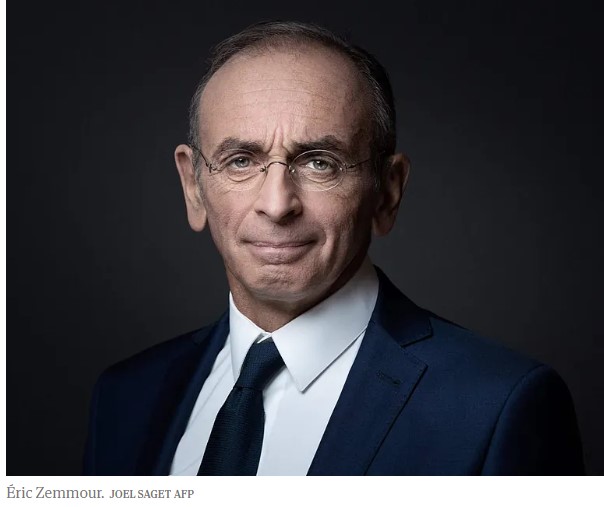
El ultraderechista Éric Zemmour anuncia su candidatura a las presidenciales de F...
- SINE
- No.52349
- Nair De La Rivera


