Schiaretti musters victory over UCR-PRO-Civic Front coalition; Kirchnerite finishes third
Córdoba province Governor José Manuel de la Sota was on his way to securing a win late last night, with his party set to govern the second largest electoral district in the country for four more years. The provisional result was seen as favouring his chances against Sergio Massa’s Renewal Front ahead of the dissident Peronist presidential primaries scheduled for August 9.
At press time, De la Sota’s protegé, Juan Schiaretti, had received 38.11 percent of the votes against the 34.04 percent of gubernatorial candidate Oscar Aguad, a Radical (UCR) party lawmaker who was running as part of the Juntos por Córdoba coalition that includes Mauricio Macri’s PRO and Luis Juez’s Civic Front.
Kirchnerite contender Eduardo Accastello, who was hoping to make inroads in a difficult province for the national government, finished in a distant third place after mustering 18.08 percent of the preferences.
At press time, results from 60.04 percent of polling stations had been tabulated.
“We humbly accept this victory... and will call all political parties to discuss state policies,” said Schiaretti, a close De la Sota ally who will return to power after governing the province from 2007 to 2011. “Governors should always listen to what the others have to say.”
During his speech, he blasted the “arrogance and authoritarism” of other policial leaders, in what was seen as a strong criticism of the national administration.
The newly-elected governor also acknowledged the calls he received from Macri, from Buenos Aires province Governor Daniel Scioli and from Legal and Technical Secretary Carlos Zannini. President Cristina Fernández de Kirchner also called him to congratulate him for his victory.
Anti-federal government speech
De la Sota took the stage at 10.40pm and praised “those who don’t bend their knees before the powers-that-be,” a twist on his anti-federal government views. He criticized Scioli (“La Cámpora’s candidate”) and Macri, whom he accused of setting up “a ticket that brought together the worst elements of the old-style politics.”
Massa tried to ride the coattails of the winning candidate by showing up at Schiaretti’s party electoral bunker alongside economist Roberto Lavagna, national lawmaker Graciela Camaño and Buenos Aires province candidate Felipe Solá.
With yesterday’s results, UPC will continue to govern the province it has been managing since 1999, with de la Sota and Schiaretti alternating power, following 16 years of uninterrupted UCR rule.
While provisional results made it clear Aguad was not able to pull off a surprise election by winning the province, the 32.79 percent of votes the non-Peronist contender mustered at press time made it clear it was still a solid result. Analysts believed a poor performance for the candidate backed by Macri could have damanged the appeal of his presiential bid.
Córdoba City
“We pulled off a very good election,” Schiaretti’s campaign chief Juan Carlos Massei told reporters minutes after 6pm. However, he soon acknowledged there would be “a close race” in Córdoba’s capital city.
In the province’s capital, which makes up for 38.9 percent of the district’s registered voters, De la Sota’s dauphin was receiving 30.40 percent of the votes — some eight percentage points less than his PRO-UCR rival.
Aguad was winning the district with 38.49 percent, despite complaints by his closest aides that he did not receive enough support from incumbent Mayor Ramón Mestre, also a Radical. Mestre has been at odds with Juez because the Civic Front senator has repeatedly accused him of graft.
The Workers’ Leftist Front (FIT) did well in the province’s capital, mustering 9.17 percent of the votes (11.25 percentage points in the race for provincial lawmakers), almost doubling its provincial average.
Delays
Low temperatures in the early delayed the voters’ visit to the polls. For the second time in the province’s history, citizens cast their vote on a single ballot (BUS), where all candidates for each electoral category are indicated in one sheet of paper and identified with a picture.
Vote count was extremely quick in the La Falda and Marcos Juárez districts, where the electronic voting system was making its debut. At 7pm, 98 percent of electoral tables in those regions — largely favourable to De la Sota’s UPC — had already been counted.
However, no further data was uploaded to the Córdoba electoral board’s official website until 9.36pm, when citizens received results from 6.15 percent of electoral tables and a “clearer” trend was observed.
Herald staff with online media

728 x 90
De la Sota’s candidate wins Córdoba election
- Sección: ISEN
- 10:07 AM, jul 06

Últimas Publicaciones
-
La inteligencia israelí no encuentra pruebas de una compra de votos que alterase...
- SINE
- No.52709
- Nair De La Rivera
-
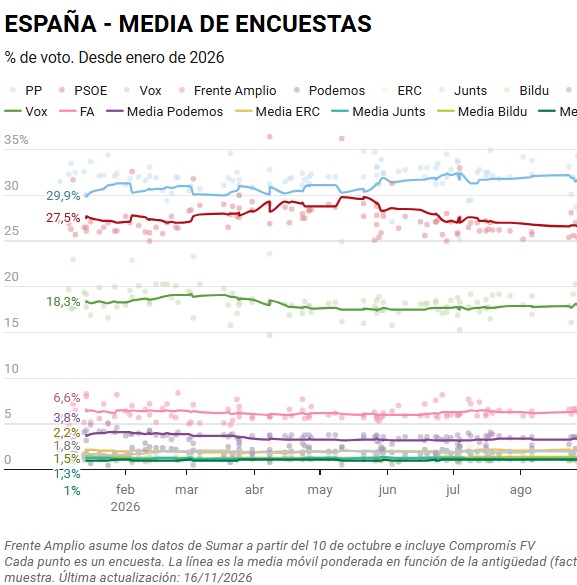
Encuestas de las elecciones generales en España 2026: así están los sondeos del...
- SINE
- No.52708
- Nair De La Rivera
-

Sweden sets Christmas deadline for government formation, or call snap election
- ISEN
- No.36650
- Alberto Bethancourt


